










• Latest
The Importance Of Making A Proper Will

What Are The Effects Of Suspending A Constitution?

12 years ago
CPEA external examination 2024

Official summary results of the 2026 Caribbean Primary Exit Assessment

6 hours ago
Temporary closure of Palmiste Lane, Mabouya Road, St John

Temporary traffic restrictions: Seamoon bridge, St Andrew

7 hours ago
Linda Straker: A fearless voice for human rights and humanity

Linda Straker: A fearless voice for human rights and humanity

10 hours ago
Traffic notice: Settlement Road, Frequente

Temporary road closure: Ravine Public Road, St George

1 day ago

REOI: OECS Data for Decision Making Project – Consulting Services, Individual Consultant

1 day ago
People empowerment through construction 

People empowerment through construction 

1 day ago
OECS Heads of Government focus on trade, connectivity and economic resilience

OECS Heads of Government focus on trade, connectivity and economic resilience

1 day ago
Vacancy: Chief Executive Officer

GTA vacancy: Human Resource Manager

1 day ago
Grenada’s alcohol use reality

Grenada’s alcohol use reality

1 day ago
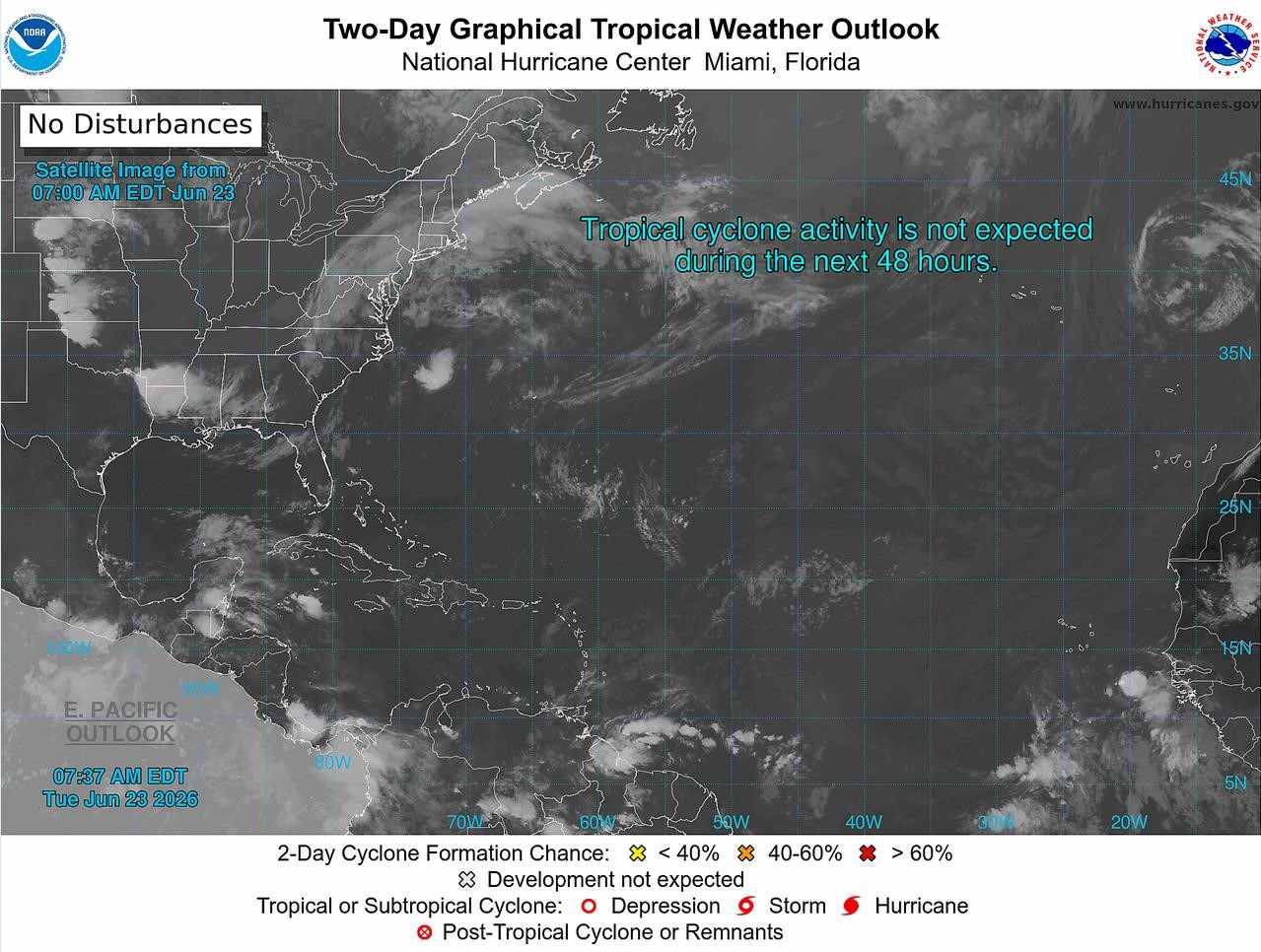
Tropical Weather Outlook:  Tuesday, 23 June 2026 (8 am)

Tropical Weather Outlook: Tuesday, 23 June 2026 (8 am)

1 day ago
This Day in History

This Day in History: 23 June 1831

1 day ago

Grenada’s new Atlantic bridge to Nigeria could be a diplomatic turning point

2 days ago
NOW Grenada
  • Front Page
  • Categories
    • General News
      • All
      • Agriculture & Fisheries
      • Arts & Culture
      • Business
      • Education
      • Environment
      • Health
      • History
      • Lifestyle
      • Law
      • Politics
      • Technology
      • Travel & Tourism
      • Weather
      • Youth
    • Sports
      • All
      • Athletics
      • Cricket
      • Football
      • Watersports
    • Community
      • All
      • Tribute
    • Crime
    • Features
      • All
      • Today in History
    • Opinion/Commentary
    • Press Releases
      • All
      • Advertisements
      • Notices
  • Video
  • Notices & Vacancies
  • Advertise
  • Contact Us
No Result
View All Result
  • Front Page
  • Categories
    • General News
      • All
      • Agriculture & Fisheries
      • Arts & Culture
      • Business
      • Education
      • Environment
      • Health
      • History
      • Lifestyle
      • Law
      • Politics
      • Technology
      • Travel & Tourism
      • Weather
      • Youth
    • Sports
      • All
      • Athletics
      • Cricket
      • Football
      • Watersports
    • Community
      • All
      • Tribute
    • Crime
    • Features
      • All
      • Today in History
    • Opinion/Commentary
    • Press Releases
      • All
      • Advertisements
      • Notices
  • Video
  • Notices & Vacancies
  • Advertise
  • Contact Us
No Result
View All Result
NOW Grenada
No Result
View All Result

What Are The Effects Of Suspending A Constitution?

This story was posted 12 years ago
7 October 2014
in OPINION/COMMENTARY
4 min. read
Sir Lawrence A Joseph
0
VIEWS
Share

By Dr Lawrence A Joseph

A constitution may be suspended legally by activation of an emergency provision in the constitution itself or it may be suspended illegally by the occurrence of a coup d’etat.

It will be recalled that a coup d’etat occurred in Grenada on 13 March 1979 when the People’s Revolutionary Government (PRG) toppled Prime Minister Eric Gairy from power and suspended the constitution. Following an internal conflict amongst the revolutionaries, PRG Prime Minister Maurice Bishop, some of his cabinet colleagues and a number of civilians were murdered. This happened on Fort George (then called Fort Rupert) on 19 October 1983.

After the military intervention by Caribbean and American forces on 25 October 1983, an offshoot of the PRG called the Revolutionary Military Council (RMC) was itself overthrown. Governor General Sir Paul Scoon then took control and merely constitutionalised the suspension of the Constitution by declaring a state of emergency under section 17. In 1984 Bernard Coard and eighteen others were subsequently indicted to stand trial for the murder of Maurice Bishop and others. By way of a pre-trial motion the defendants challenged the constitutionality, validity and competence of the court to undertake their trial. Paradoxically the court in which they were scheduled to be tried was the same court which the PRG established after the coup d’etat. This court displaced the regional constitutional court.

Undoubtedly, the judges of this unconstitutional court were faced with a judicial dilemma. If they adopted the strict letter of the original Constitution, by way of the doctrine of strict constitutionalism, then they would have had no choice but to agree with the defendants that they should be set free because the court was unconstitutional, invalid and incompetent to conduct their trial. The court also gave consideration to the question as to whether or not the PRG had acquired de jure status. If they did then a new legal order would have been created which would have made the PRG court constitutional.

The Court of Appeal considered that whilst the usurper regime in Grenada had de facto status, there was insufficient evidence adduced to the court for a determination to be made that the regime governed de jure. De facto status refers to governmental control in fact only, and de jure status refers to governmental control both in fact and in law. Despite the recognition which was given to the PRG by some independent states, President Haynes of the Court of Appeal correctly determined that recognition in accordance with international law is insufficient to grant de jure status to a usurper regime. De jure status must be determined in accordance with municipal (local) law, and in order to reach at that determination the regime must be legitimated either by general elections or by referendum. This situation was non-existent in the Grenada case.

The judges of the Court of Appeal then correctly concluded that despite the unconstitutionality of the court, the well-recognised doctrine of necessity was the best available option for furnishing validity (ie official binding acceptability) and competence (ie legal authority) to the court. This doctrine caters for the accommodation of unconstitutional or illegal activities in necessitous situations for a temporary period. An important implication of adopting this doctrine is that the original legal order was still presumed to have had continuity. It is to be observed that after the coup d’etat, the regime promised to develop a new constitution to replace the suspended one; this was never done. A promise was also made to have general elections within a reasonable time frame; this was never done. As a consequence, it was reasonable to presume that following the coup d’etat and suspension of the constitution there was no discontinuity of the original legal order.

In 1977 a coup d’etat occurred in the Seychelles located in the Indian Ocean and the original constitution was suspended. A new Constitution was adopted, and general elections were held which the usurper regime won. In that situation it was correctly decided by the court (Valabhajji v Controller of Taxes, 1980) that a new legal order was created ab initio because the populace had given the usurper regime legitimacy and validity.

In 2006 the last of four coups d’etat over a twelve year period occurred in the Republic of Fiji. The military led by one Frank Bainimarama suspended the constitution and ruled the country until recent general elections on 17 September of this year 2014. Bainimarama’s party won the elections and therefore the former usurper regime became clothed with legitimacy and validity. Unlike what occurred in Grenada a number of years ago a new legal order has been created in Fiji following the official endorsement by the populace at general elections. The then usurper regime itself and all of its actions have been legitimised.


NOW Grenada is not responsible for the opinions, statements or media content presented by contributors. In case of abuse, click here to report.
Tags: bishopcoardconstitutioncoup d'etatprg

© NOW Grenada Ltd. All Rights Reserved. Terms of Use | Privacy Policy

No Result
View All Result
  • Front Page
  • Categories
    • General News
      • All
      • Agriculture & Fisheries
      • Arts & Culture
      • Business
      • Education
      • Environment
      • Health
      • History
      • Lifestyle
      • Law
      • Politics
      • Technology
      • Travel & Tourism
      • Weather
      • Youth
    • Sports
      • All
      • Athletics
      • Cricket
      • Football
      • Watersports
    • Community
      • All
      • Tribute
    • Crime
    • Features
      • All
      • Today in History
    • Opinion/Commentary
    • Press Releases
      • All
      • Advertisements
      • Notices
  • Video
  • Notices & Vacancies
  • Advertise
  • Contact Us

Copyright NOW Grenada

We are using cookies to give you the best experience on our website.

You can find out more about which cookies we are using or switch them off in . Visit our Privacy Policy | Terms of Use.

No Result
View All Result
  • Front Page
  • Categories
    • General News
      • All
      • Agriculture & Fisheries
      • Arts & Culture
      • Business
      • Education
      • Environment
      • Health
      • History
      • Lifestyle
      • Law
      • Politics
      • Technology
      • Travel & Tourism
      • Weather
      • Youth
    • Sports
      • All
      • Athletics
      • Cricket
      • Football
      • Watersports
    • Community
      • All
      • Tribute
    • Crime
    • Features
      • All
      • Today in History
    • Opinion/Commentary
    • Press Releases
      • All
      • Advertisements
      • Notices
  • Video
  • Notices & Vacancies
  • Advertise
  • Contact Us

Copyright NOW Grenada

Powered by  GDPR Cookie Compliance
Privacy Overview

This website uses cookies so that we can provide you with the best user experience possible. Cookie information is stored in your browser and performs functions such as recognising you when you return to our website and helping our team to understand which sections of the website you find most interesting and useful. Visit our Privacy Policy | Terms of Use.

Strictly Necessary Cookies

Strictly Necessary Cookie should be enabled at all times so that we can save your preferences for cookie settings.